
Charting the Sky: The Pilot Career Path

Abstract
For those driven by a passion for aviation, becoming a professional pilot is both a challenging and rewarding journey. This career path requires dedication, financial commitment, and a deep sense of responsibility—but it also offers the unparalleled freedom of flight and opportunities to work in one of the world’s most dynamic industries.
From Student to Certified Aviator
Mahbub Khan, an FAA Commercial Pilot and FAA Gold Seal Certified Flight Instructor, exemplifies the disciplined progression required to succeed in aviation. He holds ratings in both single- and multi-engine aircraft, including advanced type ratings in the Hawker 800 and Cessna Citation 650 business jets. His credentials reflect the structured sequence of FAA certifications every aspiring pilot must follow.
The typical civilian pilot career begins with the Private Pilot License (PPL). This foundational step introduces students to the basics of aircraft operation, navigation, and safety, enabling them to fly with passengers but not for compensation. Next comes the Instrument Rating (IR), which allows pilots to operate in low-visibility conditions, relying exclusively on their instruments when weather deteriorates. Building upon these skills, pilots then pursue the Commercial Pilot License (CPL), qualifying them to be compensated for their flying services. Because most airline operations involve multi-engine aircraft, an additional Multi-Engine Rating (MER) is required. The next stage—becoming a Certified Flight Instructor (CFI) or Instrument Instructor (CFII)—is a pivotal one. Flight instructing not only sharpens teaching and communication skills but also allows pilots to accumulate crucial flight hours toward the ultimate goal: the Airline Transport Pilot (ATP) Certificate, the highest level of FAA certification.
Building Hours and Experience
Reaching the ATP milestone typically requires at least 1,500 hours of total flight time, a benchmark set by the FAA to ensure thorough experience and readiness for airline operations. Most aspiring airline pilots reach this number by instructing others, flying charter or cargo missions, or undertaking other time-building roles.
The process from the first solo flight to eligibility for the ATP certificate generally spans two to three years —with 12 to 18 months dedicated to initial training and another one to two years focused on accumulating hours. Pilots can solo as young as 16 years old, earn a PPL at 17, and qualify for an ATP certificate at 23, provided they hold an FAA First Class Medical Certificate, the highest standard for flight fitness.

Career Progression and Opportunities
Once ATP-certified, many pilots begin at a regional airline, typically as a First Officer. Regional airlines operate feeder services for major carriers and offer valuable real-world experience in multicrew operations, airline procedures, and complex airspace environments. After two to four years, pilots often advance to Regional Captain, commanding their own flights and mentoring new aviators.
The next goal is joining a major airline—such as Delta, United, or American—as a First Officer, and eventually advancing to Captain. At this tier, compensation increases significantly: regional airline pilots often earn between $80,000 and $120,000 annually, while senior captains at major airlines can exceed $200,000 per year, with additional benefits and schedules based on seniority2.
Alternative Pathways: The Military Route
While most civilian pilots fund their own training, some choose the military pathway. Here, the government provides complete flight training in exchange for years of service. After fulfilling their military commitments, pilots must still complete the necessary FAA certifications to transition into the civilian workforce—but they do so with extensive flight and operational experience that is highly valued across the industry.
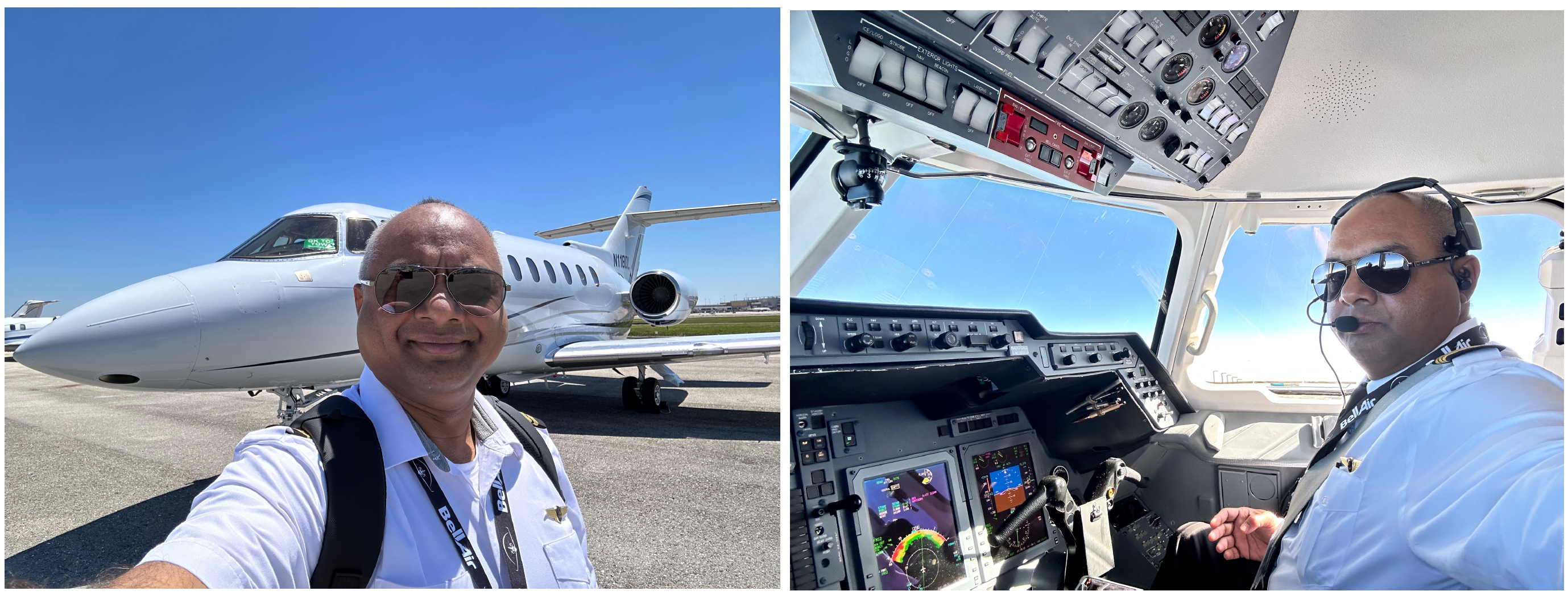
Fig. 1: Hawker 800, on the ground and at 41000 feet mean sea level
The Rewarding Journey of a Lifetime
A career in aviation is not a singular destination—it's a lifelong journey of growth, precision, and discovery. The process demands discipline and resilience but rewards pilots with an extraordinary career and a view of the world from a unique vantage point. As the aviation industry continues to expand globally, ambitious professionals like Mahbub Khan continue to inspire the next generation of aviators to set their sights skyward.
REFERENCES
- FAA pilot certification, https://www.faa.gov/licenses_certificates/airmen_certification
- US Bureau of Labor and Statistics, https://www.bls.gov/ooh/transportation-and-materialmoving/airline-and-commercial-pilots.htm
Comments 0
No comments yet. Be the first to comment!
Sign in to leave a comment.