
Literature Review of AI-Driven Structural Health Monitoring and Damage Assessment: From Sensor-Based Systems to Vision-Language Models

Abstract
1. INTRODUCTION
Structural health monitoring is the continuous monitoring of a structure to ensure its integrity. A core part of SHM is structural damage assessments done by licensed engineers who determine the safety and stability of a structure. SHM provides real-time, continuous data, ensuring safety and risk mitigation, optimized maintenance and cost efficiency as well as possibly extending the lifespan of the structure (Chen and Omenzetter 2013; Hassan et al. 2023). When it comes to public safety and risk mitigation, structural damage assessments can detect structural fatigue or cracks before they lead to collapse, thereby ensuring human safety (Hassan et al. 2023; Silva-Campillo et al. 2023). Periodic monitoring of structures also improves efficiency and optimizes maintenance. Knowing exactly where the structural problem lies can allow engineers to avoid unnecessary repairs as well as minimize costly emergency shutdowns (Chen and Omenzetter 2013; Costin et al. 2023). Tracking the condition of a structure also allows the structure to be well maintained and will show engineers where exactly to reinforce the structure in order to expand its lifespan (Harmanci et al. 2016; Costin et al. 2023).
Although structural health monitoring provides significant benefits, traditional manual inspection approaches are constrained by the subjective nature of human evaluation. Human inspection also faces practical challenges. Hidden or inaccessible damage, such as internal cracks or foundation movement, may not be visible during roputine assessment. If such damage is missed, the evaluation may lead to an incorrect and potentially dangerous outcome. The sensory capabilities of the human eye may not be sufficient for evaluating some internally damaged structures. Manual monitoring of also relies heavily on the individual’s experience and judgement, which can lead to inconsistency or human error (Agdas et al. 2016; Quqa et al. 2025).
To address the challenges associated with human evaluation, alternative approaches have been developed, including sensor-based SHM systems and vision-based computational methods (Hoskere et al. 2018; Quqa et al. 2025). More recently, advances in artificial intelligence, particularly vision models and large language model (LLM)-based reasoning systems, have enabled more automated and scalable approaches to structural damage assessment (Liang et al. 2025; Jiang et al. 2025; Chen et al. 2026). This paper reviews recent literature from the past decade, focusing on AI-driven and LLM-integrated frameworks for structural health monitoring and automated damage assessment.
2. METHODS
The Google Scholar (https://scholar.google.com/) website was used to identify papers for this review. Keywords such as “artificial intelligence”, “LLM”, “Structural health monitoring”, “SHM”, “damage assessment” and “VLM” were used to find papers on automated structural health monitoring methods. Approximately 20 papers primarily between 2016 and 2026, were selected based on relevance to AI-based or automated structural health monitoring and damage assessment. Papers were included if they focused on structural or infrastructure applications of AI, machine learning, computer vision, or sensor-based monitoring systems. Preference was given to recent studies that proposed novel AI methodologies or demonstrated practical applications for structural damage detection, assessment, or monitoring.
A summary table has been added to improve readability and facilitate comparison across studies. The table outlines the AI techniques, applications, key strengths, and limitations of each reviewed work.
Table 1: Summary of Reviewed Studies on AI-Based Structural Health Monitoring
|
Study |
AI Technique |
Application |
Strengths |
Limitations |
|
Agdas et al. (2016) |
Structural Health Monitoring systems (sensor + visual inspection comparison) |
Bridge condition assessment |
Demonstrates benefits of SHM over manual inspection |
Not AI-based; limited automation |
|
Chen & Omenzetter (2013) |
Reliability assessment framework using SHM data |
Bridge reliability evaluation |
Probabilistic structural safety modeling |
Requires extensive sensor data; no ML |
|
Harmanci et al. (2016) |
Autonomous strain-based monitoring system |
Lifecycle structural monitoring |
Real-time autonomous monitoring framework |
Limited scalability and generalization |
|
Hoskere et al. (2018) |
Deep CNN (computer vision) |
Structural inspection and damage detection |
Early deep learning application; strong visual detection |
Requires large labeled datasets |
|
Silva-Campillo et al. (2023) |
Review of SHM sensor systems |
Marine structure monitoring |
Comprehensive system overview |
Focused on marine domain only |
|
Hassan et al. (2023) |
SHM evaluation frameworks |
Bridge assessment systems |
Summarizes SHM practices |
Limited AI integration |
|
Costin et al. (2023) |
Digital twin frameworks |
Bridge SHM and maintenance |
Integrates existing SHM technologies |
Still reliant on traditional data pipelines |
|
Chen et al. (2026) |
Large Vision-Language Models (VLMs) |
Post-disaster damage assessment |
Automated reporting + interpretation |
Early-stage validation |
|
Chen et al. (n.d.) |
Vision-Language Model |
Bridge inspection |
Multimodal reasoning for inspection |
Limited dataset validation |
|
Jiang et al. (2025) |
Large Language Model (LLM) |
Earthquake damage assessment |
Natural language reasoning for damage reports |
Needs structured visual inputs |
|
Jiang et al. (2026) |
Unified VLM framework |
Post-earthquake building damage |
Multitask learning improves robustness |
Computationally expensive |
|
Liang et al. (2025) |
Lightweight VLM (DL-VLM) |
Bridge health diagnosis |
Efficient and deployable model |
Reduced accuracy vs large models |
|
Quqa et al. (2025) |
Survey (regional SHM methods) |
Bridge monitoring at scale |
Roadmap for climate-aware SHM |
Not a technical method |
|
Tan (2025) |
Time-series neural networks |
Sensor-based SHM optimization |
Strong signal processing and inference |
Limited visual integration |
|
Wang et al. (2025) |
Digital twin frameworks |
SHM system integration |
Lifecycle monitoring integration |
Implementation complexity |
|
Wang et al. (2026) |
Segmentation + VLM |
Satellite-based damage detection |
High interpretability |
Depends on image resolution |
|
Xiao et al. (2025) |
Vision-Language foundation model |
Road damage understanding |
Benchmark + large-scale dataset |
Early-stage foundation model |
|
Yang et al. (2025) |
LLM-based framework (WaveformerNet-Mixer-LLM) |
Bridge damage identification |
Hybrid AI architecture improves reasoning |
Limited real-world deployment |
|
Zhou et al. (2026) |
Lightweight SSD-based CNN |
Concrete crack detection |
Fast and efficient detection |
Limited semantic reasoning |
3. Discussion
The reviewed literature showed a clear evolution in structural health monitoring (SHM) and damage assessment methods. Traditional SHM systems primarily relied on sensor-based approaches, including strain gauges, vibration monitoring, and reliability-based analyses (Chen and Omenzetter 2013; Harmanci et al. 2016). These methods provide continuous structural data and can detect changes in structural behavior over time; however, they often require extensive sensor installation, maintenance, and expert interpretation (Chen and Omenzetter 2013; Quqa et al. 2025).
Recent advances in artificial intelligence have led to increased use of computer vision techniques for automated inspections. Studies utilized convolutional neural networks (CNNs), object detection algorithms, and image segmentation models to identify structural anomolies such as cracks and earthquake damage from images (Hoskere et al. 2018; Zhou et al. 2026; Wang et al. 2026). Compared to traditional evaluation methods, these approaches can reduce inspection time while improving consistency and scalability (Hoskere et al. 2018; Chen et al. n.d.).
More recently, researchers have begun incorporating vision-language models (VLMs) and large language models (LLMs) into structural damage assessment workflows. Unlike vision models that focus only on defect detection, VLM-based systems can combine visual information with reasoning, allowing for automated damage classification, report generation, and decision support (Chen et al. 2026; Jiang et al. 2025). Frameworks such as DL-VLM and related approaches demonstrate the potential for AI to assist engineers throughout the inspection process, rather than solely finding defects (Liang et al. 2025; Chen et al. n.d.; Jiang et al. 2026).
Despite the promising results reported across the literature, several challenges remain. Many AI approaches rely on large, high-quality datasets that may not be readily available for all infrastructure types (Xiao et al. 2025; Jiang et al. 2026). The reliability of AI-generated evaluations also remains an important concern, especially in safety-critical applications where engineering decisions can have significant consequences (Chen et al. 2026; Hoier and Ahmed 2025). Moreover, few studies have fully integrated sensor-based monitoring, computer vision, and language-based reasoning into a unified framework (Costin et al. 2023; Wang et al. 2025).
Overall, the reviewed literature indicates a clear transition from traditional sensor-driven monitoring toward increasingly automated AI-based structural health monitoring systems (Quqa et al. 2025; Wang et al. 2025). While this shift demonstrates strong potential for improving inspection efficiency and scalability, several practical challenges must be addressed for real-world deployment. Future research should prioritize the development of robust multimodal data fusion frameworks that integrate sensor measurements, computer vision outputs, and language-based reasoning into a unified decision-making pipeline. In addition, the lack of standardized benchmark datasets remains a critical limitation, as current studies are often evaluated on task-specific or non-comparable datasets, restricting reproducibility and cross-method evaluation. Establishing large-scale, diverse benchmarks covering multiple structural types, damage conditions, and environmental settings would significantly improve model generalization and comparability. Finally, although VLM- and LLM-based approaches show promise for automated reporting and decision support, further work is needed to ensure their reliability, interpretability, and computational efficiency in field deployment scenarios, particularly under domain shift and safety-critical inspection conditions (Chen et al. 2026; Hoier and Ahmed 2025; Costin et al. 2023).
Figure 1 shows the evolution of artificial intelligence methods for structural damage assessment.
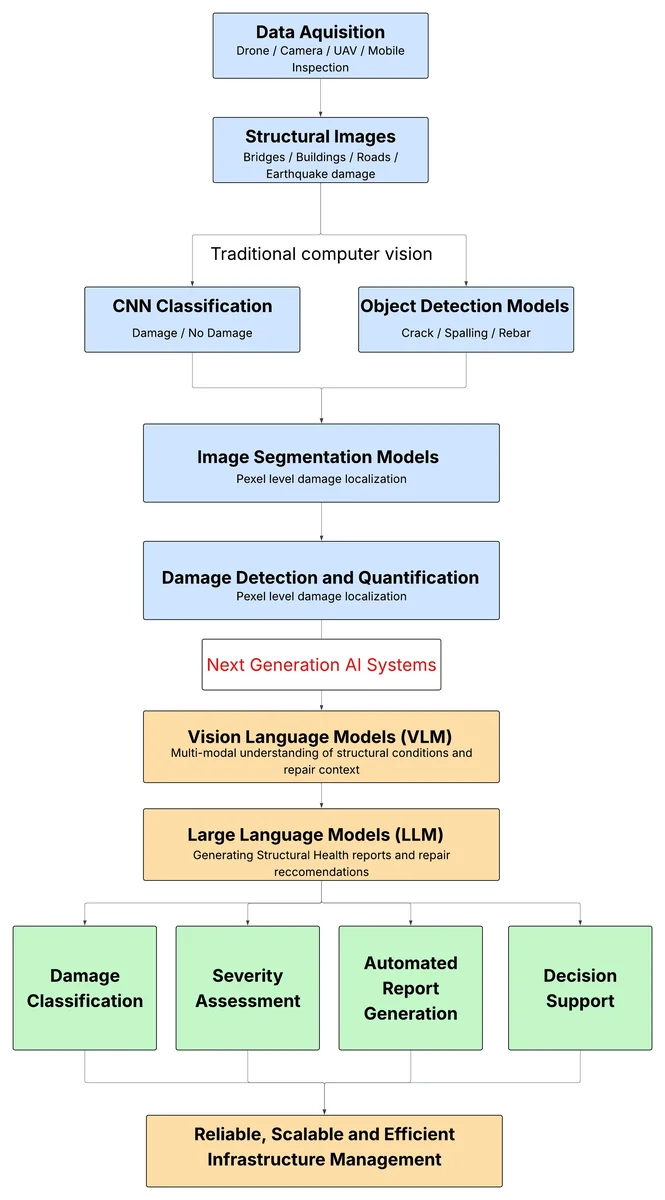
Figure 1. Evolution of artificial intelligence methods for structural damage assessment.
Traditional computer vision approaches, including CNN classification, object detection, and image segmentation, focus primarily on identifying and localizing structural defects from inspection images (Hoskere et al. 2018; Zhou et al. 2026). Recent developments integrate Vision-Language Models (VLMs) and Large Language Models (LLMs), enabling multimodal reasoning that supports automated damage classification, severity assessment, report generation, and maintenance decision-making, thereby transforming defect detection into comprehensive intelligent inspection workflows (Liang et al. 2025; Chen et al. 2026; Jiang et al. 2026).
4. CONCLUSION
Structural health monitoring plays a critical role in maintaining the safety and longevity of civil infrastructure. This review examined recent developments in AI-based structural damage assessment, including sensor-driven monitoring systems, computer vision techniques, vision-language models, and digital twin frameworks. The literature demonstrates a clear trend toward greater automation, with modern AI systems increasingly capable of detecting, classifying, and interpreting structural damage. While these technologies show significant promise for improving inspection efficiency and reducing reliance on manual assessments, challenges related to data availability, model reliability, and interpretability remain. Continued research is needed to address these limitations and to develop integrated systems that combine multiple sources of structural information. As AI technologies continue to advance, they are expected to play an increasingly important role in structural health monitoring and infrastructure management.
REFERENCES
- Agdas, D., J. A. Rice, J. R. Martinez, and I. R. Lasa. 2016. “Comparison of Visual Inspection and Structural-Health Monitoring As Bridge Condition Assessment Methods.” Journal of Performance of Constructed Facilities, 30 (3): 04015049. https://doi.org/10.1061/(asce)cf.1943-5509.0000802.
- Chen, X. H., and P. Omenzetter. 2013. “A Framework for Reliability Assessment of an In-Service Bridge Using Structural Health Monitoring Data.” Key Engineering Materials, 558: 39–51. https://doi.org/10.4028/www.scientific.net/kem.558.39.
- Chen, Z., E. Asadi Shamsabadi, S. Jiang, L. Shen, and D. Dias-da-Costa. 2026. “Integration of large vision language models for efficient post-disaster damage assessment and reporting.” Nature Communications, 17 (1). Springer Science and Business Media LLC. https://doi.org/10.1038/s41467-025-68216-z.
- Chen, Z., Y. Zou, V. González, J. Ingham, and L. Wotherspoon. n.d. “Bridge Inspection Using A Multimodal Vision Language Model.” Kalpa Publications in Computing, 22: 578–566. EasyChair. https://doi.org/10.29007/m7wj .
- Costin, A., Alireza Adibfar, and J. A. Bridge. 2023. “Digital Twin Framework for Bridge Structural Health Monitoring Utilizing Existing Technologies: New Paradigm for Enhanced Management, Operation, and Maintenance.” Transportation Research Record. SAGE Publishing. https://doi.org/10.1177/03611981231208908.
- Harmanci, Y. E., M. D. Spiridonakos, E. N. Chatzi, and W. Kübler. 2016. “An Autonomous Strain-Based Structural Monitoring Framework for Life-Cycle Analysis of a Novel Structure.” Frontiers in Built Environment, 2. https://doi.org/10.3389/fbuil.2016.00013.
- Hassan, S. H., Q. M. Junaiddin, N. M. Daud, M. S. A. Hamid, S. I. H. Ismail, and Z. Zakariah. 2023. “Evaluation Structural Health Monitoring (SHM) in Bridge Assessment.” Lecture Notes in Civil Engineering, 121–131. Singapore: Springer Nature Singapore. https://doi.org/10.1007/978-981-99-6022-4_7.
- Hoier, C., and K. Ahmed. 2025. “Structural Damage Detection Using AI Super Resolution and Visual Language Model.” Computer Vision and Pattern Recognition. https://doi.org/10.48550/arXiv.2508.17130.
- Jiang, Y., J. Wang, X. Shen, and K. Dai. 2025. “Large language model for post‐earthquake structural damage assessment of buildings.” Computer-Aided Civil and Infrastructure Engineering, 40 (31): 6324–6342. Wiley. https://doi.org/10.1111/mice.70010.
- Jiang, Y., J. Wang, X. Shen, K. Dai, and Q. Ge. 2026. “Multitask unified large vision-language model for post-earthquake structural damage assessment of buildings.” Automation in Construction, 182: 106720. Elsevier BV. https://doi.org/10.1016/j.autcon.2025.106720.
- Liang, S., Z. He, H. Gui, and F. Liu. 2025. “DL-VLM: A Dynamic Lightweight Vision-Language Model for Bridge Health Diagnosis.” Big Data and Cognitive Computing, 10 (1): 3. MDPI AG. https://doi.org/10.3390/bdcc10010003.
- Quqa, S., O. Lasri, G. Delo, P. F. Giordano, C. Surace, A. Marzani, and M. P. Limongelli. 2025. “Regional-scale bridge health monitoring: survey of current methods and roadmap for future opportunities under changing climate.” Structural Health Monitoring, 24 (4): 2309–2337. https://doi.org/10.1177/14759217241310525.
- Silva-Campillo, A., F. Pérez-Arribas, and J. C. Suárez-Bermejo. 2023. “Health-Monitoring Systems for Marine Structures: A Review.” Sensors, 23 (4): 2099. https://doi.org/10.3390/s23042099.
- Tan, Y. 2025. “Enhancing structural health monitoring through advanced time series-targeted neural networks : from sensor placement to data filtering, inference, and diagnosis.” Polyu.edu.hk. Hong Kong Polytechnic University. https://theses.lib.polyu.edu.hk/handle/200/14243.
- Hoskere, V., Y. Narazaki, T. A. Hoang, and B. F. Spencer. 2018. “Vision-based Structural Inspection using Multiscale Deep Convolutional Neural Networks.” arXiv (Cornell University). Cornell University. https://doi.org/10.48550/arxiv.1805.01055.
- Wang, Q., B. Huang, Y. Gao, and C. Jiao. 2025. “Current Status and Prospects of Digital Twin Approaches in Structural Health Monitoring.” Buildings, 15 (7): 1021. MDPI AG. https://doi.org/10.3390/buildings15071021.
- Wang, Y., J. Cui, C. Zhai, X. Tao, and Y. Li. 2026. “Integrating segmentation and vision-language model for automated and interpretable building damage assessment from satellite imagery.” Advanced Engineering Informatics, 71: 104320–104320. Elsevier BV. https://doi.org/10.1016/j.aei.2026.104320.
- Xiao, X., Y. Zhang, J. Wang, L. Zhao, Y. Wei, H. Li, Y. Li, X. Song, X. Wang, S. K. Roy, H. Xu, and T. Wang. 2025. “RoadBench: A Vision-Language Foundation Model and Benchmark for Road Damage Understanding.” arXiv.org. Accessed June 2, 2026. https://arxiv.org/abs/2507.17353.
- Yang, J., J. Shen, and minzhi chen. 2025. “WaveformerNet-Mixer-LLM: A Large Language Model-Based Framework for Damage Identification of Bridge Structure.” SSRN Electronic Journal. RELX Group (Netherlands). https://doi.org/10.2139/ssrn.5507626.
- Zhou, T., Y. Liu, Y. Hong, and Q. Pu. 2026. “Lightweight Cascade Algorithm for Concrete Crack Detection with Enhanced SSD Techniques.” Journal of Computing in Civil Engineering, 40 (2). https://doi.org/10.1061/jccee5.cpeng-7034.
Comments 0
No comments yet. Be the first to comment!
Sign in to leave a comment.