Executive Summary
Introduction: The Blurring Line Between Human and Machine Art
The emergence of AI-generated artwork has sparked a global debate regarding the potential of machines to replicate, or even surpass, human creativity. The integration of AI tools, such as DALL-E, MidJourney, and ChatGPT, into artistic processes has prompted the art world to reconsider the role of human creativity and the potential for a new creative era. This phenomenon has led to the development of new artistic styles, the exploration of novel mediums, and the reevaluation of the very definition of art itself. For instance, the use of AI-generated art in advertising has become increasingly popular, with companies like Coca-Cola and Nike utilizing AI-generated images in their campaigns. As AI-generated art continues to push the boundaries of what is possible, it is essential to examine the capabilities and limitations of these systems, as well as their potential impact on the art world.
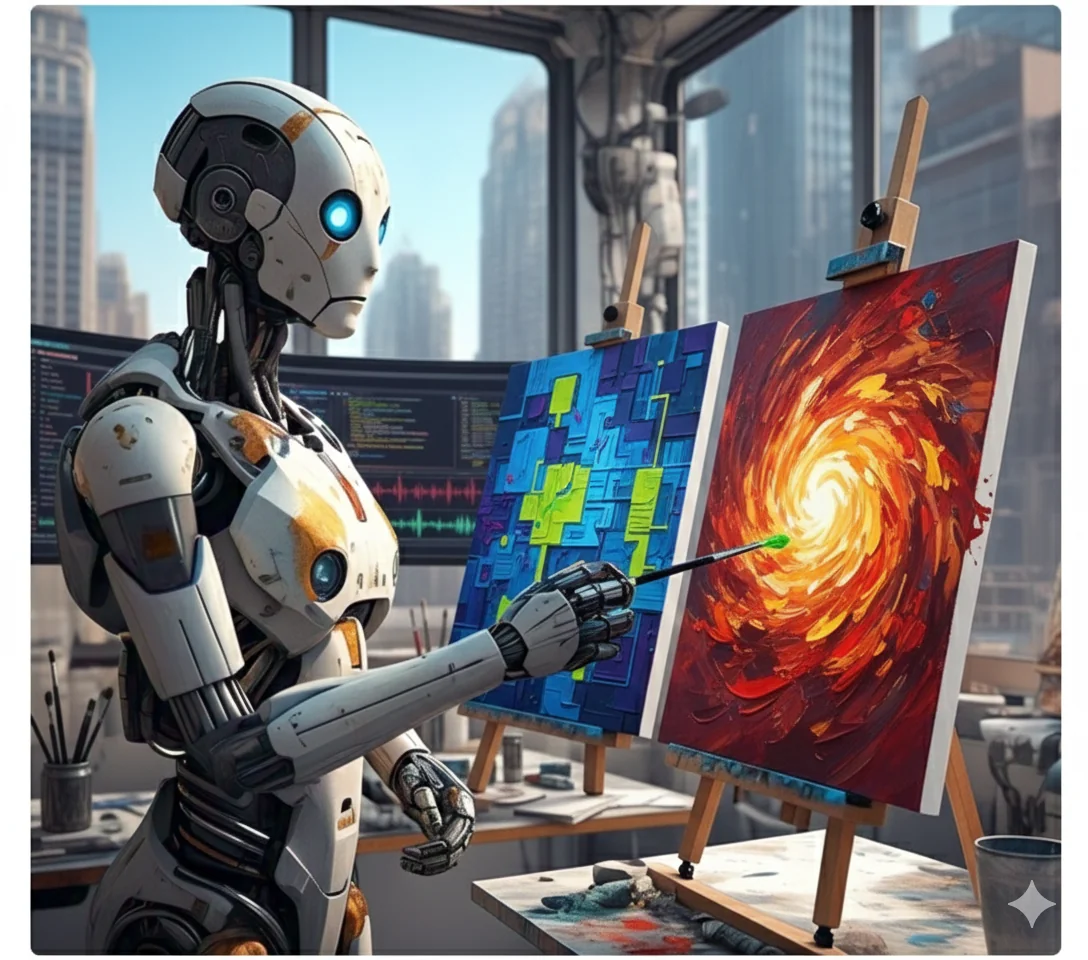
The Rise of AI in Creative Fields
AI has undergone a significant transformation, evolving from an analytical tool to a creative collaborator. Contemporary AI systems possess the capability to:
- Generate hyper-realistic images from text prompts with remarkable accuracy
- Compose original music in multiple genres, demonstrating a profound understanding of musical composition
- Write poetry, scripts, and novels that rival those created by human authors
- Design 3D models and architectural concepts that exhibit innovative and functional design principles
Startups such as OpenAI and Stability AI have democratized access to these tools, enabling individuals with minimal technical expertise to create professional-grade content in a matter of seconds. This has led to a proliferation of AI-generated art, with many artists and creatives leveraging these tools to enhance their workflows and explore new ideas. For example, the artist Robbie Barrat used a combination of AI algorithms and traditional painting techniques to create a portrait that sold for over $400,000 at Christie's auction house.
AI’s Creative Strengths
Machines exhibit exceptional proficiency in:
- Speed & Scale: Generating an extensive array of design variations in a remarkably short period
- Pattern Recognition: Analyzing artistic styles across centuries with precision and accuracy
- Cross-Domain Fusion: Seamlessly blending disparate artistic styles, such as Van Gogh’s textures with cyberpunk themes, to create innovative and captivating works
Furthermore, AI systems can process vast amounts of data, identify patterns, and generate new ideas at an unprecedented scale and speed. This has enabled artists to explore new creative avenues, experiment with novel styles, and push the boundaries of what is possible in their respective mediums. The use of AI in music production, for instance, has led to the creation of new genres and sub-genres, such as AI-generated hip-hop and electronic dance music.
The Human Edge: Where AI Falls Short
Despite the impressive creative outputs generated by AI, these systems lack the fundamental drivers of human creativity:
- Intentionality: AI systems do not possess the capacity for self-directed creative expression, instead responding to predetermined prompts and guidelines
- Emotional Depth: The absence of lived experiences and emotional intelligence limits AI’s ability to create works that genuinely resonate with human audiences
- Cultural Context: AI systems often demonstrate a limited understanding of historical, social, and cultural nuances that underpin human creative expression
As noted by artist Luba Elliott: "AI can mimic style, but not the human struggle that gives art its resonance." This quote highlights the importance of human experience and emotion in the creative process, and the limitations of AI systems in replicating these essential aspects of art. The artist and critic, Jerry Saltz, further emphasizes the importance of human intuition and creativity, stating that "AI can make art, but it can’t make art that matters."
The Collaborative Future: Humans + AI
Forward-thinking creators are embracing AI as a tool that complements human creativity, rather than replacing it:
- Digital artist Refik Anadol utilizes AI to transform complex data into immersive and thought-provoking installations
- Musician Holly Herndon collaborates with her "AI twin" to create innovative and captivating vocal compositions
- Writers leverage ChatGPT to overcome creative blocks and generate new ideas
- The architect, Frank Gehry, uses AI to generate complex architectural designs and models
This synergy enables artists to focus on high-concept ideation, while AI handles the technical execution, thereby augmenting human creativity and fostering innovative artistic expression. By combining the strengths of both humans and AI, artists can create works that are more nuanced, complex, and emotionally resonant than ever before. The collaboration between humans and AI has also led to the development of new art forms, such as AI-generated performance art and virtual reality experiences.
Conclusion: Co-Creation Over Competition
While AI is capable of producing astonishing creative works, it lacks the consciousness, cultural awareness, and emotional intentionality that define human artistry. The future of art lies not in replacement, but in partnership, where machines amplify human creativity rather than replicate it. As AI tools continue to evolve, the most compelling art will likely emerge from artists who master this new collaborative paradigm, one that harmoniously integrates human and machine creativity. By embracing this synergy, we can unlock new possibilities for artistic expression, and create a future where human and machine creativity coexist in perfect harmony.
Comments 0
No comments yet. Be the first to comment!
Sign in to leave a comment.